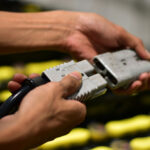
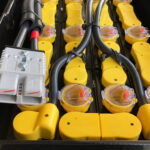
For warehouses, manufacturers, and material handling operations in Jefferson, WI, a forklift that cannot hold a charge can quickly disrupt the workday. Whether equipment is moving pallets through a distribution facility or supporting production at a local manufacturing plant, the right battery charger helps keep operations running efficiently. Choosing a compatible forklift battery charger involves more than matching a plug or selecting a charger with enough power. Battery voltage, amp-hour capacity, and chemistry all determine whether a charger can safely and effectively support your equipment. Quick Answer: A forklift battery charger must match the battery’s nominal voltage, support its amp-hour... View Article
A forklift that is sitting at a charger instead of moving material can quickly become an operational problem. For warehouses, manufacturers, distribution operations, and other material-handling facilities in Jefferson, WI, charging strategy can directly affect when electric forklifts are available and how smoothly a shift moves. The relationship between charging and forklift downtime is straightforward: charging becomes downtime when a forklift does not have enough usable battery capacity to complete the work expected of it. Charger selection, charging schedules, battery condition, operating intensity, and fleet size all influence whether charging fits into planned breaks or interrupts production. What local businesses... View Article
For warehouses, manufacturers, distribution operations, and other material handling businesses in Jefferson, WI, forklift uptime can directly affect how smoothly a shift runs. A forklift battery that is charged inconsistently or incorrectly can create avoidable interruptions, while a well-managed charging routine can help equipment stay available when operators need it. Proper battery charging can improve forklift fleet efficiency by supporting consistent battery performance, reducing avoidable charging interruptions, and helping limit premature battery wear. For Jefferson businesses that rely on electric forklifts throughout the workday, better charging practices can also make fleet scheduling and battery maintenance more predictable. What local businesses should... View Article
When January temperatures in Jefferson County dip well below freezing, warehouse floors get colder, loading docks turn frigid, and unheated staging areas feel more like walk-in freezers than logistics hubs. For warehouse managers and fleet maintenance supervisors, that drop in temperature often brings a familiar and frustrating problem: electric forklifts that will not power on at the start of a shift. In many cases, the culprit is not mechanical failure. It is a frozen or severely compromised battery. Understanding how to prevent forklift batteries from freezing in Wisconsin is critical for maintaining uptime, protecting equipment investments, and ensuring workplace safety.... View Article
Proper maintenance of forklift batteries is one of the most overlooked areas in warehouse and material handling operations. Yet, it plays a crucial role in reducing downtime, saving costs, and increasing overall equipment efficiency. Batteries are the heart of electric forklifts, and when neglected, they quickly deteriorate. This leads to more frequent replacements, costly repairs, and unpredictable performance. For businesses operating in places like Jefferson, WI, where heavy-duty industrial use is common, maximizing battery life is not just about operational efficiency, it’s about financial strategy. Many companies invest heavily in electric forklifts to improve sustainability and reduce emissions, but then... View Article